
Once upon a time, not long ago, US Customs and Border Protection (CBP) repeatedly stopped and seized fake designer handbags at the border. Bags purporting to be Louis Vuitton, Chanel, Gucci, to name a few, showed up in shipments intended for resale throughout the country.
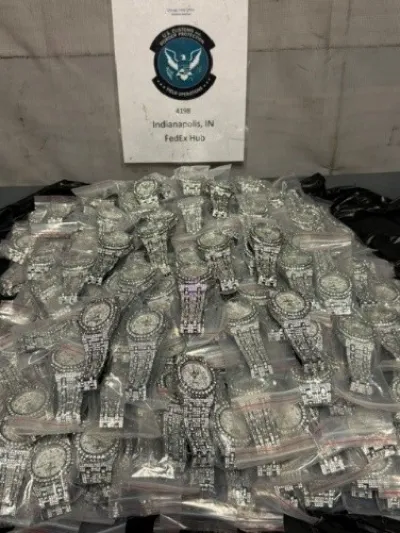
Image courtesy: cbp.com
Lately, however, when it comes to luxury products, handbags are fewer in the CBP seizure listings. Instead, it’s timepieces and jewelry, especially watches. In the last two bigs, CBP reported two such instances.
Three hundred knockoff Audemars Piguet watches, valued at $12 million if real, were checked and seized on October 14, 2026, in Indianapolis, IN. The shipment originated in Hong Kong, with Indianapolis as its destination.
Nine days later, CBP officials in Dallas/Fort Worth stopped 11 purported Richard Mille timepieces, which, if real, would have been worth $2.6 million. This effort was, according to CBP, part of a “targeted enforcement operation focusing on fake luxury goods from China.”
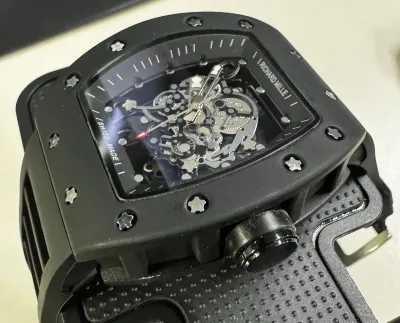
Image courtesy: cbp.com
Just last month, in September, Cartier watches that would have been valued at $28 million if real, were seized in Chicago, IL.
What is interesting here is that the data lines up with two broader shifts — one in the luxury industry, the other in trade policy.
Whereas once, handbags were the fake good of choice (or at least more easily caught by officials), now watches and jewelry are more often the subject.
It’s no secret personal luxury goods have struggled in recent years — particularly those built on fashion and handbags like Louis Vuitton — reporting negative or sluggish growth. (Consider the writers, this one included, and influencers pondering whether the handbag has fallen out of favor.)
On the other hand, luxury conglomerates like Richemont, which houses brands like Van Cleef & Arpels, Cartier, and Buccellati, have fared better, as some consumers pivot to jewelry and watches— tying their expenditures to goods with ‘intrinsic value’ like gold and diamonds.
Could counterfeit demand simply be mirroring the real luxury market? Maybe.
Then there’s the policy shift. Beyond the Trump Administration’s expanding tariffs, the US fully eliminated the de minimis import exemption in August 2025 (earlier for China and Hong Kong) — the rule that had let shipments under $800 enter the country duty-free. One stated rationale for the policy change was to stem the flow of fake goods.
So, has that hit counterfeit handbags harder than watches and jewelry? Is it coincidence? Are fake bags slipping in undetected? Or are international crackdowns on knockoff bags working so the goods never make it to the US?
What do you think?
Read more here, here, and here
- Maura Carlin posted 2 days ago
- last edited 14 hours ago