
Every Maison has a first bag — and for Louis Vuitton, it was the Steamer. Over a century later, the Steamer appears in the LV Touch lineup in the Spring-Summer 2026 Pre Collection, reimagined once again by Pharrell Williams for modern life. Stripped of logos and rendered in supple calfskin, this iteration balances heritage elegance with practical versatility, offering both a hand-carried 30 and a hands-free backpack version.
Read also: The Quirkiest Louis Vuitton Bags from Pharrell’s Spring-Summer 2026 Pre-Collection

Image courtesy: Louis Vuitton
Upright, structured, and unmistakably refined, the Steamer shares the same pioneering spirit that defined Hermès’ first-ever bag, the HAC. Each holds a singular place in its Maison’s history, showing how original designs continue to inspire contemporary reinterpretations.
Read also: The Original Hermès Bag: The Hottest HACs

From silhouette to functionality, the LV Touch Steamer and HAC demonstrate both shared DNA and distinct personalities. Here, we break down the elements they share and where they diverge — from design details and construction to everyday practicality — to help you decide which you’d rather add to your rotation.


Louis Vuitton Steamer 30: Heritage, Form, and Function
First introduced in 1901 as Louis Vuitton’s earliest bag design, the Steamer began as a soft-sided, trunk-inspired piece, historically crafted in Monogram canvas with Vachetta leather flap and handles. Its practical, structured form made it a travel essential of its era. Carrying forward that heritage of practical elegance, the Steamer 30 LV Touch translates the original travel-ready silhouette into a modern, hand- and crossbody-ready design, with supple leather, refined hardware, and thoughtful organizational details.

Screenshot
The Steamer 30 is defined by its curved leather flap and reinforced corners, giving the bag a structured yet soft-edged silhouette. A suede front pocket features a discreet stitched V signature, while two leather straps, echoing the functional strap detailing of Hermès’ signature sangles, cinch across the flap and fasten onto a touret-style lock closure engraved with LOUIS VUITTON. Careful stitching follows the contours of the Steamer, adding subtle texture.
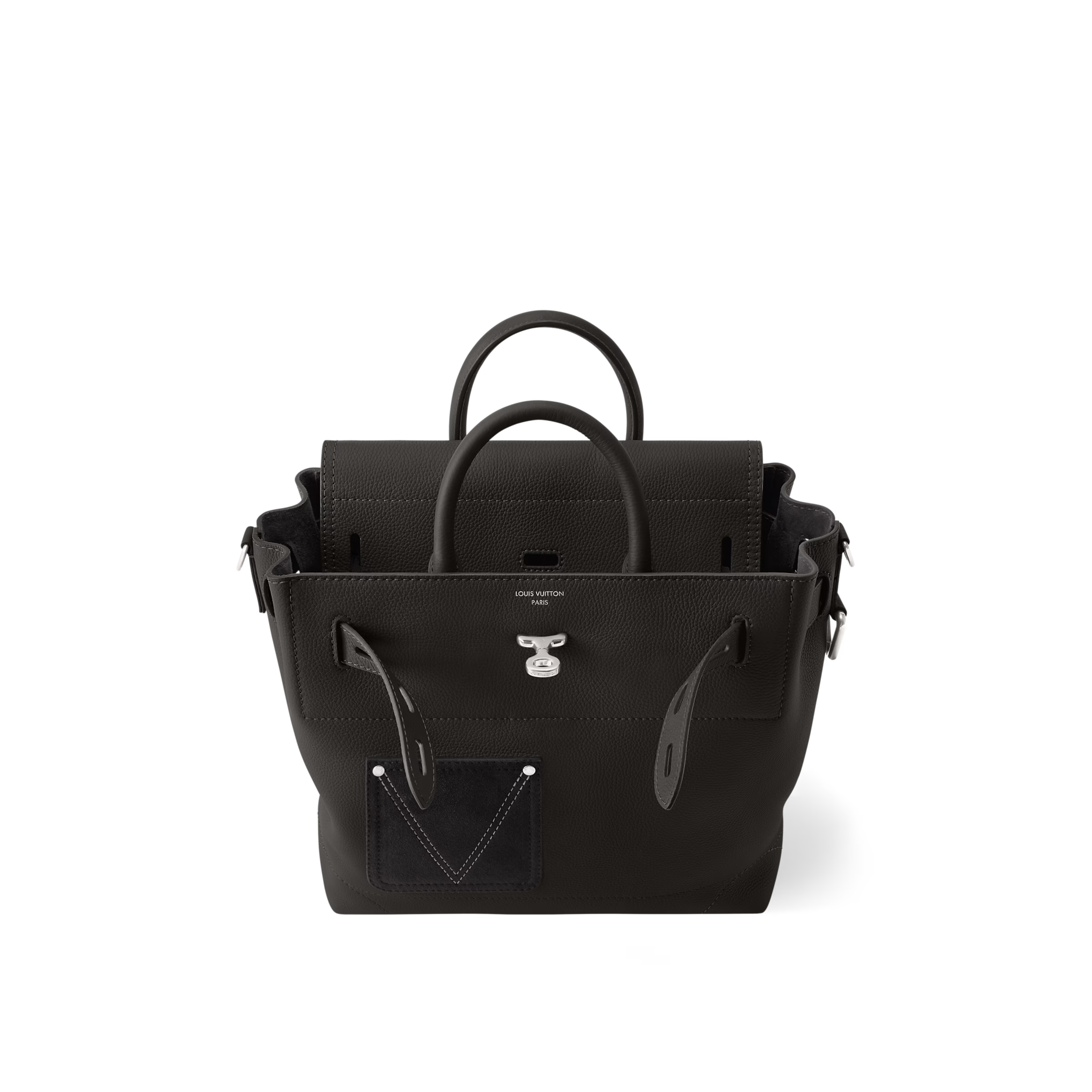
Image courtesy: Louis Vuitton
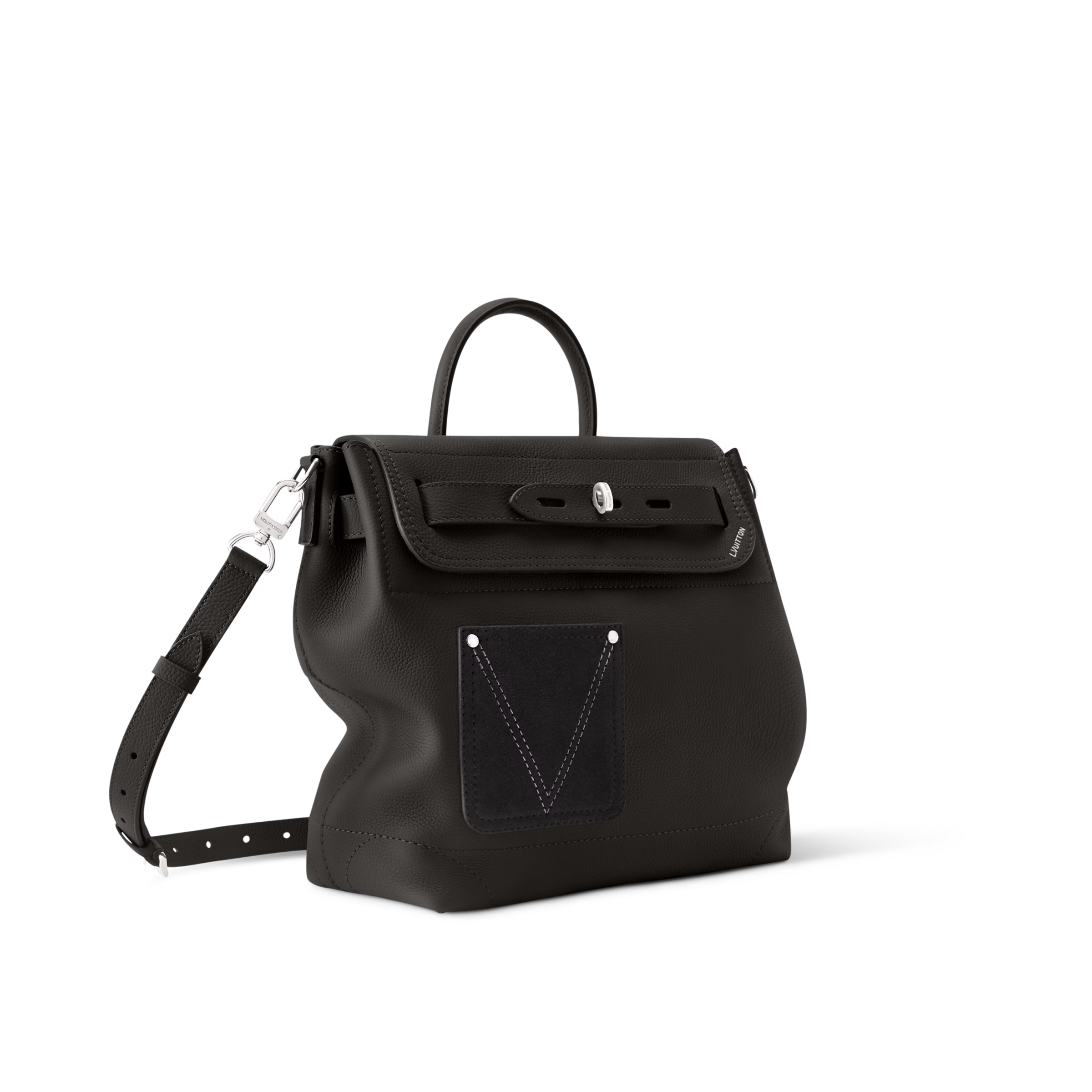
Image courtesy: Louis Vuitton
Hardware is kept minimal, letting the design speak for itself. Brushed silver-tone accents remain understated, with rivet detailing on the front pocket, the lock closure, and D-rings for the strap attachments. The flap is embossed with a matching silver-tone ‘L.VUITTON ‘ heat-stamp, and on one side, a V-shaped carabiner clip adorned with Monogram Flowers serves as a discreet finishing flourish.
Double curved top handles allow for hand-carry, while a detachable, adjustable crossbody strap (drop 15 to 24.8 inches) adds an alternative carrying option. Measuring 12.6 x 13 x 5.5 inches, the Steamer 30 offers enough space for daily essentials without altering its upright, trapezoidal form. Inside, you’ll find one main compartment, alongside a practical zippered pocket to keep things organized.
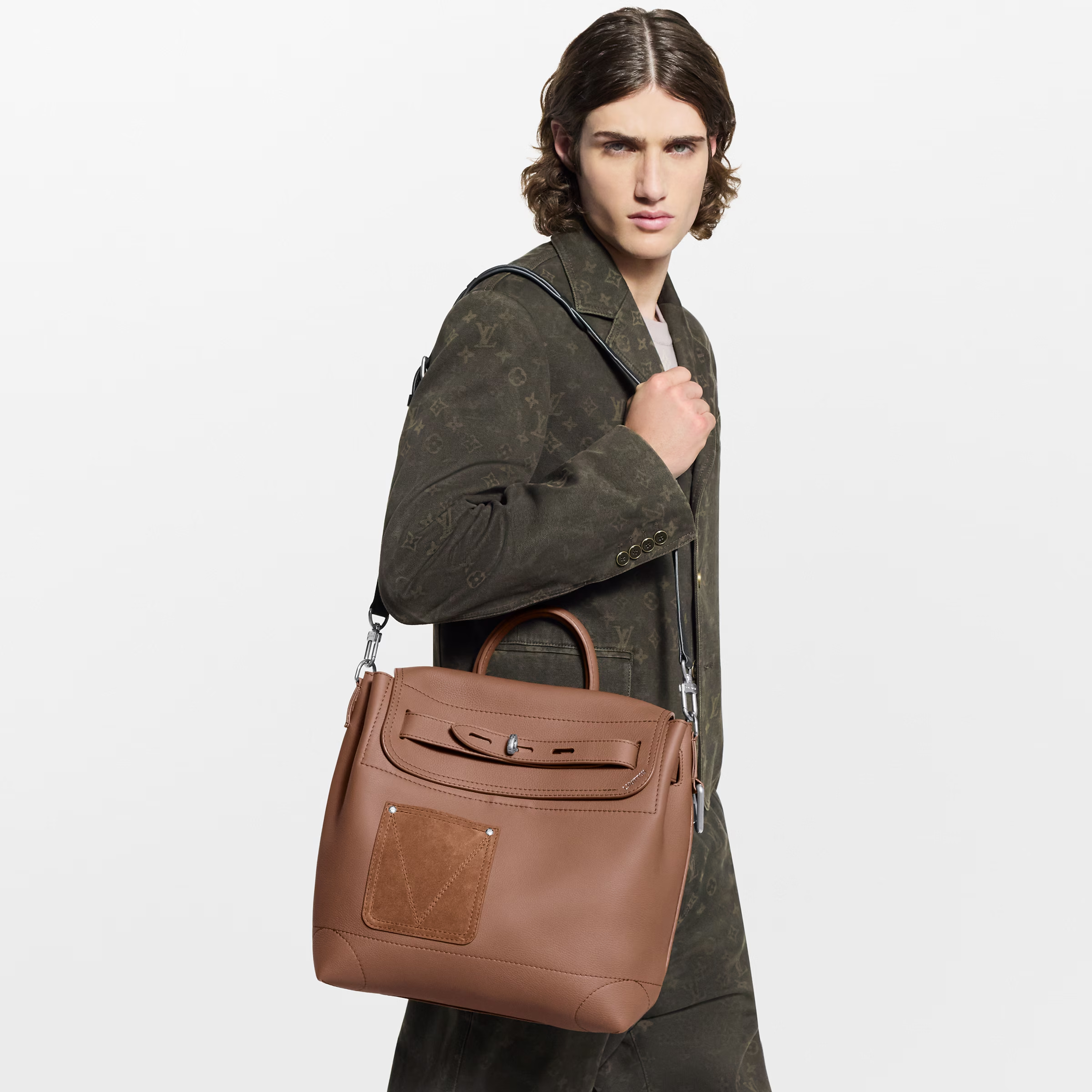
Image courtesy: Louis Vuitton
Hermès HAC 40: Minimalist Heritage with Equestrian Roots
Hermès’ Haut à Courroies (HAC) is the Maison’s original bag, designed in 1892 with equestrian practicality in mind. Originally intended to carry riding gear, it later became a versatile travel companion. Today, the HAC 40 translates that heritage into a structured, hand-carried bag that highlights exceptional leather, meticulous craftsmanship, and understated luxury.

Most commonly crafted from Togo calfskin, the HAC is executed in Hermès’ retourné construction, which allows the leather to slouch slightly over time, softening its structured silhouette while retaining its upright trapezoidal shape.
Read also: An Insider’s Guide to Hermès Leathers


The HAC’s defining feature lies in its trapezoidal silhouette, cinched at the top by signature sangles that secure onto the touret fastening. Complemented by a padlock and clochette for optional security while traveling, these elements create an instantly recognizable profile. Branding is deliberately minimal: the only visible logo is a heat-stamped Hermès, discreetly placed beneath the top flap above the hardware plate and matching the corresponding color of the hardware. Ultimate in its restraint, the HAC went on to provide the blueprint for the iconic Hermès Birkin, cementing its place as a foundational design in the Maison’s history.

Image courtesy: @thebirkinboy
Hermès’ smallest HAC currently in production, the HAC 40, measures approximately 16 x 16 x 9 inches. Inside, the HAC offers a single generous main compartment, with no additional pockets for organization. Designed exclusively for hand-carry, the HAC features dual top handles, though this comes at a cost. The HAC is exceptionally heavy even when empty, and becomes considerably more substantial when filled with a weekend wardrobe (let alone equestrian gear as originally intended).
Shared DNA and Key Differences: Steamer vs. HAC
Despite their distinct Maison heritages, the Louis Vuitton Steamer 30 and Hermès HAC 40 share several defining qualities. Both feature upright, structured silhouettes with a trapezoidal form, polished top handles for hand-carry, and minimal branding that lets the quality of leather and craftsmanship take center stage. This focus on utility continues with functional strap details at the front—sangles on the HAC and leather straps on the Steamer paired with secure closures: a touret for the former, and a turnlock for the latter.
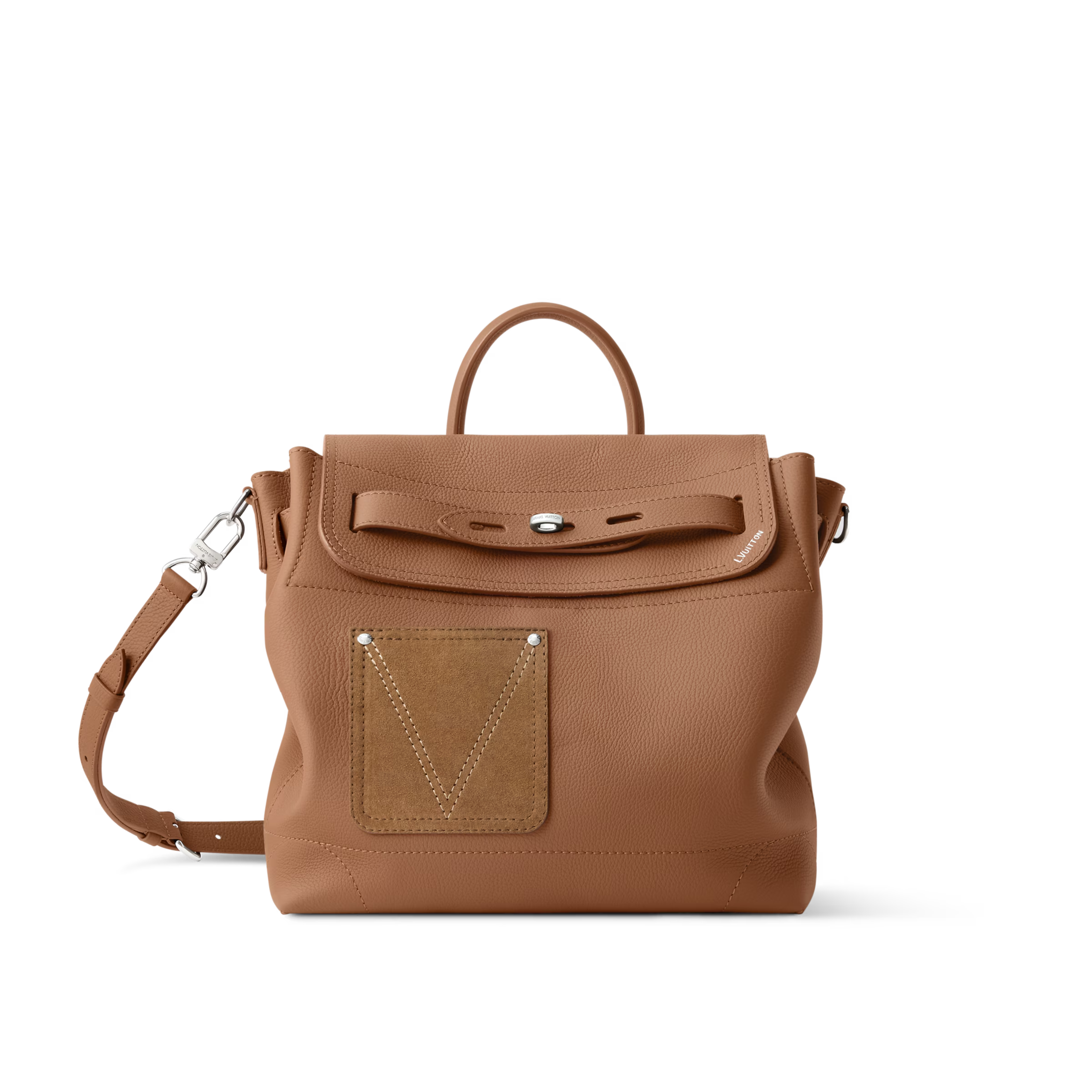
Image courtesy: Louis Vuitton

Image courtesy: Hermès
Where the bags diverge is equally telling. The Steamer 30 benefits from a detachable, adjustable shoulder strap, allowing hands-free wear, while Hermès’ HAC remains exclusively hand-carried. Inside, the Steamer 30 offers a practical layout with one main compartment plus functional pockets for organization. By contrast, the HAC 40 has a single generous main compartment but no additional pockets.
In short, these elements underscore the shared design philosophy: timeless proportions, meticulous leatherwork, and a balance between form and function.


Hands-Free Heritage: Steamer Backpack & HAC à Dos
Recognizing the need for modern, hands-free versatility, both Louis Vuitton and Hermès have translated their upright, heritage silhouettes into backpack formats, retaining key design DNA while adapting to contemporary lifestyles.
Louis Vuitton Steamer Backpack: Scale and Functionality
The Steamer Backpack mirrors the same upright trapezoidal shape of the Steamer 30 while offering practical, hands-free wear. Taller and slightly narrower than its sibling, it features reinforced corners that preserve structure while softening the silhouette. A suede front pocket with a discreet stitched V signature adds contrast, while the curved flap with dual leather straps and closure secure the design. Hardware is understated, with only the lock and strap adjusters punctuating the design.
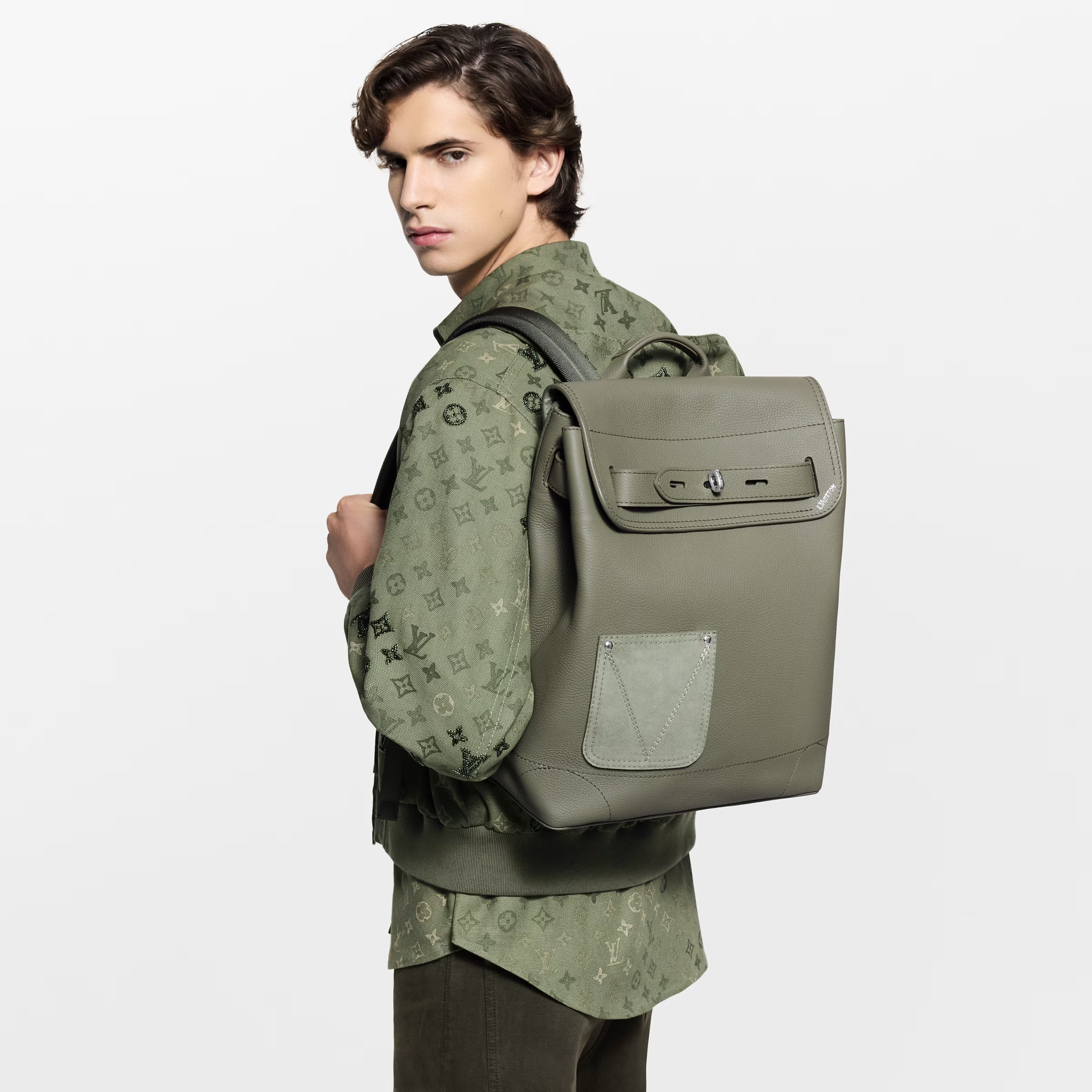
Image courtesy: Louis Vuitton
Measuring 12.2 x 15.4 x 6.1 inches, the Steamer Backpack offers enough room for daily essentials and a 16-inch laptop. Inside, a single roomy compartment is paired with a zipped pocket for smaller items and several slip pockets for organization. Dual adjustable shoulder straps and a grab-and-go top handle allow multiple carrying options.
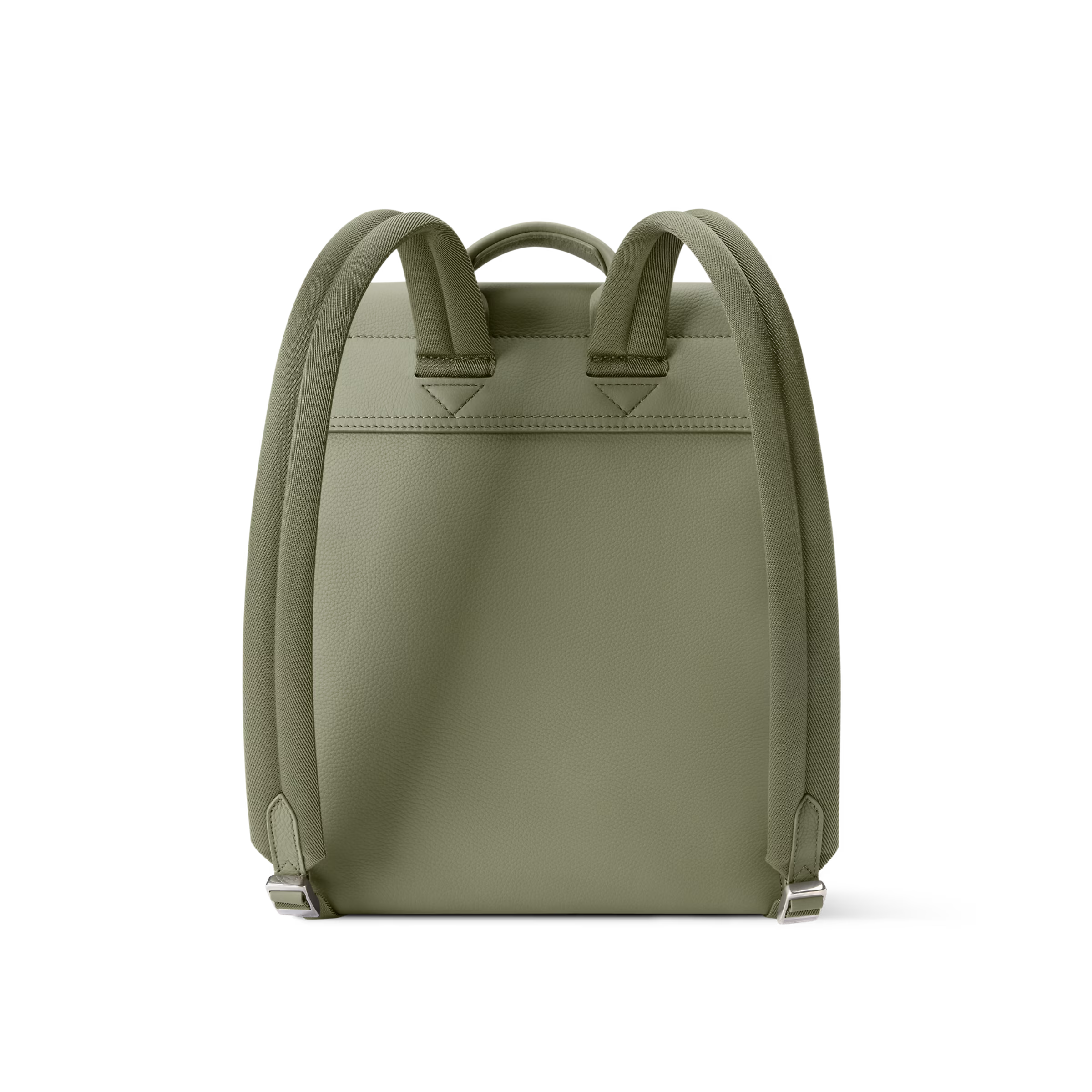
Image courtesy: Louis Vuitton
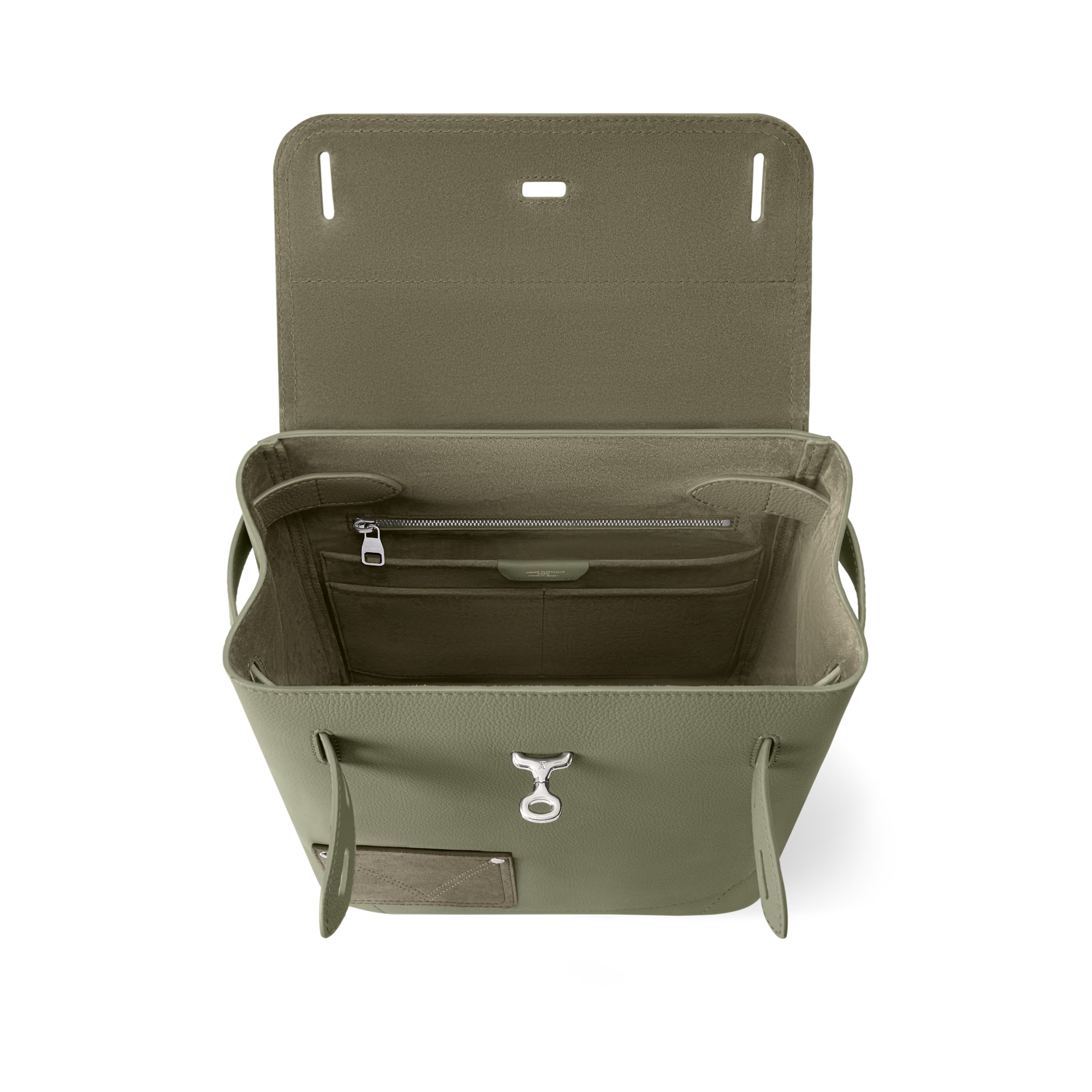
Image courtesy: Louis Vuitton
The Hermes HAC à Dos Backpack: From Saddle to Shoulder
Hermès translated the design language of the iconic HAC into a versatile, streamlined format with the introduction of the HAC à Dos backpack in Winter 2022. Most commonly crafted in Togo calfskin, it retains the signature restraint of the original HAC, with a semi-structured body, and polished wedge flap. Elevating the design further is an oversized version of the original hardware, adding a more statement aesthetic.

The HAC à Dos features a large main compartment, a flat back interior pocket, and a D-ring for keys. Offered in two sizes, the PM measures 7.1 x 11 x 3.1 inches, and the GM 10.25 x 14 x 4.5 inches. Complete with a single plain canvas adjustable shoulder strap, the HAC à Dos can be worn over one shoulder or crossbody.


Backpack Comparison: Steamer vs. HAC à Dos
While both the Steamer Backpack and HAC à Dos translate heritage silhouettes into hands-free formats, they serve slightly different purposes. The Steamer Backpack offers greater versatility with dual adjustable straps, a grab-and-go handle, and multiple interior pockets, making it ideal for commuting, travel, or everyday use. The HAC à Dos, by contrast, is more restrained and structured, with a single canvas strap allowing it to be styled on the shoulder or crossbody, rather than a traditional backpack.
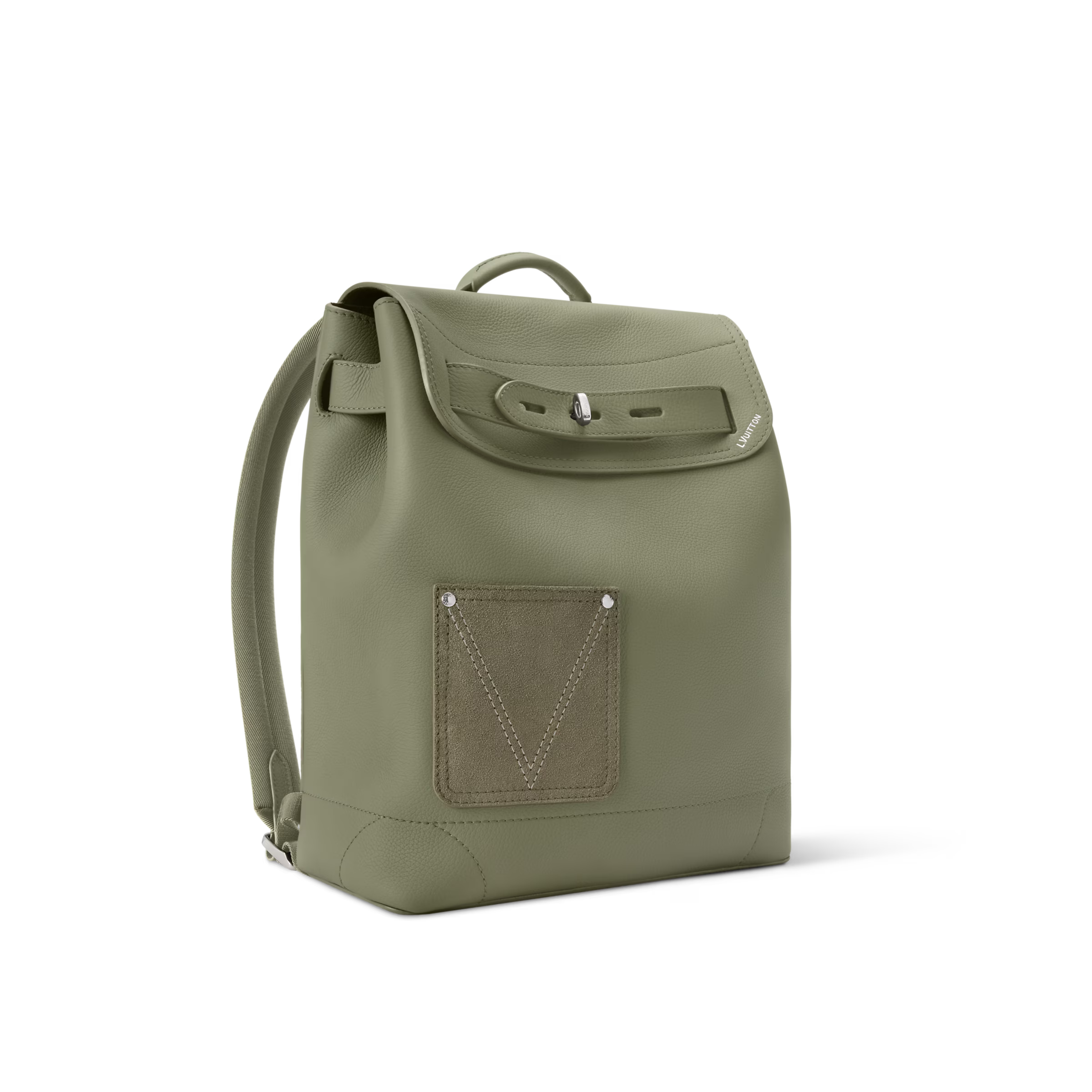
Image courtesy: Louis Vuitton

Image courtesy: Hermès

Image courtesy: Hermès
How the Louis Vuitton & Hermès Prices Compare
Price points offer another lens through which to consider these heritage designs. Louis Vuitton’s Steamer LV Touch bags present a relatively accessible entry into archival-inspired luxury, while Hermès’ HAC and HAC à Dos maintain their position as high-ticket icons.
The Louis Vuitton Steamer 30 is priced at $6,750, with the Steamer Backpack available for $6,000. By comparison, pricing for the Hermès HAC à Dos PM begins at $11,300 for Togo leather and rises to $12,800 for Barenia Faubourg calfskin. Prices for the HAC 40, are less readily available but likely exceed $13,300, the current retail price for a Hermès Birkin 30 in Togo.
Read also: US Hermès Price Increase 2025 – Here are the New Prices

Whether you’re drawn to Louis Vuitton’s pared-back, leather-forward Steamer from the LV Touch collection or the historic elegance of Hermès’ HAC, both bags demonstrate how heritage shapes can be reinterpreted for modern life.
Which do you prefer — the understated, versatile Steamer, or the iconic, equestrian-rooted HAC?
Read related articles:
The Original Hermès Bag: The Hottest HACs
Hermès Men’s Summer 2026 – Where H Canvas Bags Get Bigger and Better
The Quirkiest Louis Vuitton Bags from Pharrell’s Spring-Summer 2026 Pre-Collection
Hermès Mens Winter 2025: HAC Bags Leading the Pack
Hermès Handbags Men’s Winter 2025 Hong Kong Highlights
Hermès Kelly Pochette Rock: A New Icon Emerges
Look Who’s Carrying Birkins and Kellys
Love, PurseBop
XO





Comments