
by Maura Carlin, Editor
I have a Charvet shirt on order. As of today, I’m no longer sure what I’m actually buying. And whether or when I will get it.
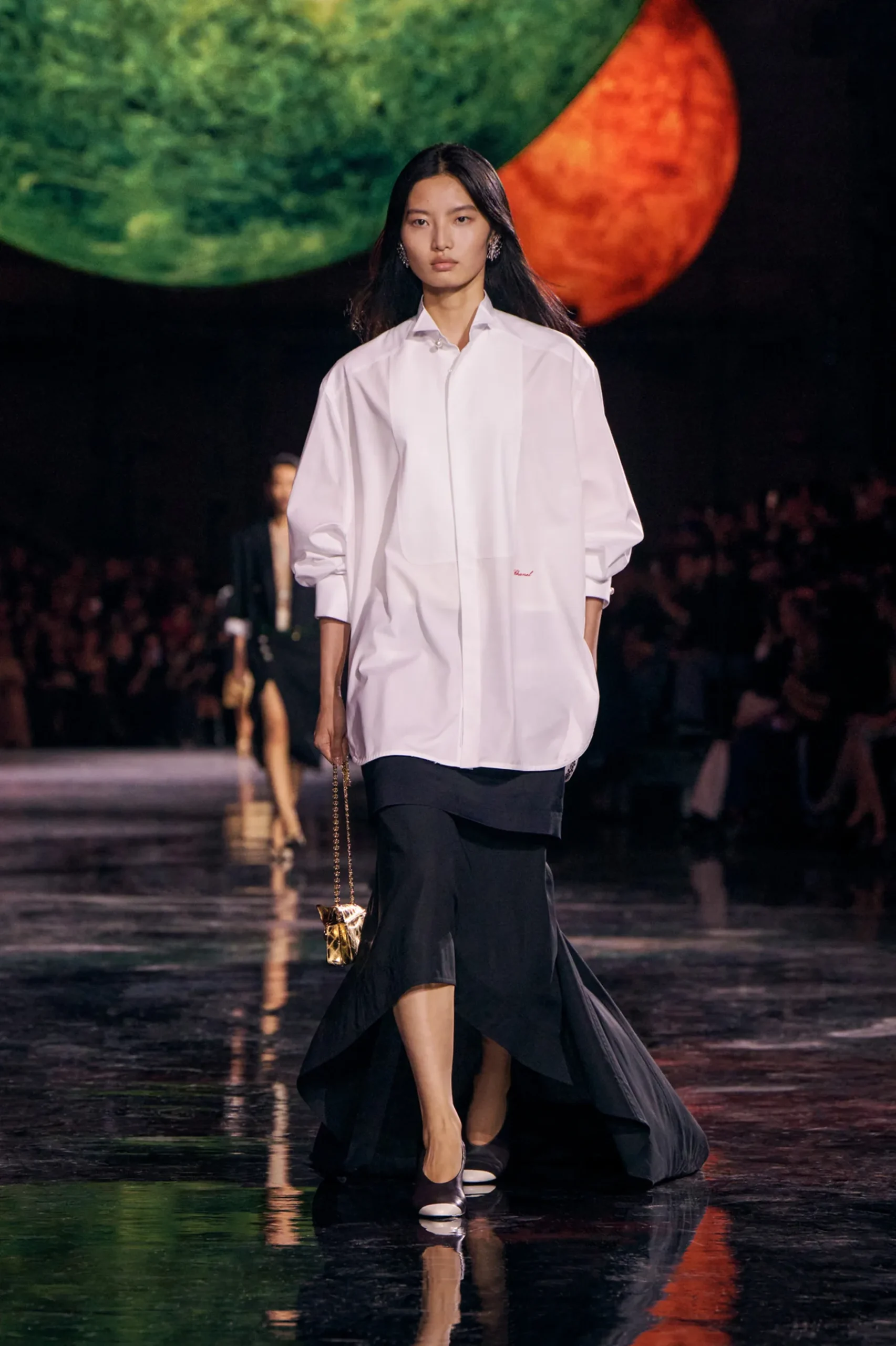
Image courtesy: chanel.com
On Thursday, Chanel announced it has acquired full ownership of Charvet — the Paris shirtmaker founded in 1838, independent for 188 years, right up until it wasn’t. Financial terms were not disclosed.
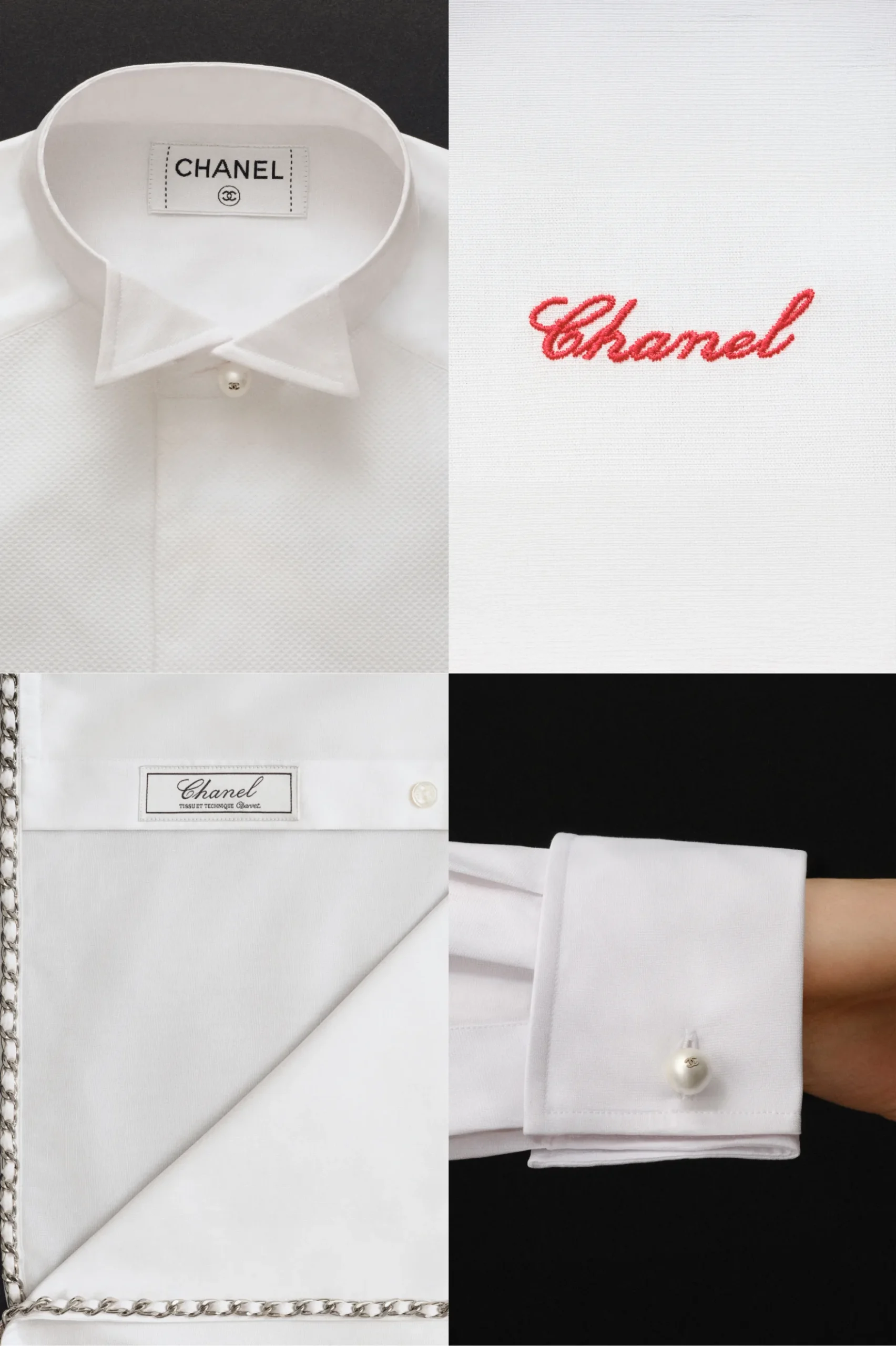
Image courtesy: chanel.com
The signs were there. Last October, Matthieu Blazy’s debut collection for Chanel opened with a shirt and trousers — a menswear staple, reframed for a house built for women. The shirt was Charvet’s. Three oversize cotton button-ups, weighed down at the hem with Chanel’s signature chain, became some of the most talked-about pieces of the season. Nicole Kidman wore one. So did Jessie Buckley.
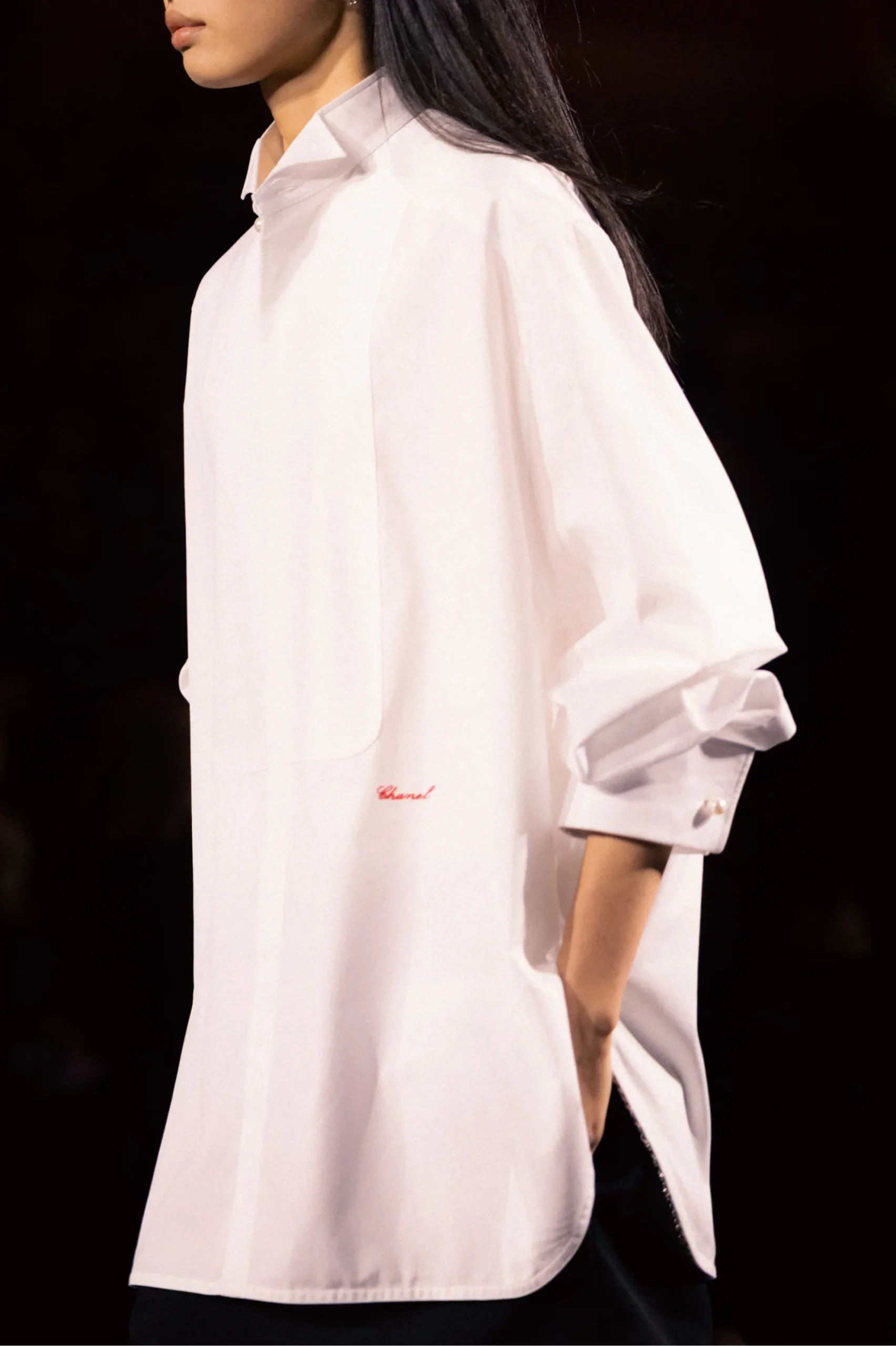
Image courtesy: chanel.com
At the time, it read as one designer borrowing another house’s craft for a single show. In hindsight — and this is my read, not something either brand said outright — it wasn’t a loan. It was an audition. You don’t build three custom pieces with a shirtmaker, put them at the center of your most-watched runway moment in years, and walk away. Somebody was already deciding whether this was a fit.
Call it a collaboration if you want. I’d call it a courtship.
The two houses go back further than Blazy, too. Coco Chanel used to buy Charvet shirts for her lover, Arthur “Boy” Capel. So when Bruno Pavlovsky, president of Chanel’s Fashion Division, told WWD, “We decided to get married,” he wasn’t reaching for a metaphor. He was pointing at a relationship that already existed.
And the business logic is clear. As Pavlovsky told the New York Times,
“Now we have a name, Chanel, for women, and a name for men, Charvet . . . Even if Chanel is about women, we see more men coming in. And even if Charvet is mostly about men, we see a lot of women going there to have shirts made. It’s up to the client — everyone is welcome. That’s the beauty and the secret of the approach.”
Read plainly, that’s a menswear play. Buying a foothold is faster than building one.
There’s a second story here. It’s about succession. The brother-sister team who owned Charvet, Jean-Claude and Anne-Marie, are 71 and 69, respectively. They wanted to secure the long-term continuity of the company and its way of doing business.
As quoted in Business of Fashion, Jean-Claude said:
“What we were looking for above all was a solution to maintain our identity and preserve what we do, as we feel it every day just how much we are unique — more and more so, unfortunately. On certain days, we pride ourselves on being the only ones to do things a certain way, but on others, it is exhausting to deal with people who do not understand . . .
Seeing Chanel’s way of doing things, in particular their way of approaching subjects with competence, sensitivity, and also taking the necessary time, respecting expertise — we realised we were aligned.”
Under family ownership, Charvet never bothered chasing you. No real e-commerce to speak of. You found the place, or you didn’t. That was the appeal — bespoke shirts made the same way since 1838, sold to people who already knew where 28 Place Vendôme was, a building owned by Charvet.
The Blazy Chanel show removed the mystery. It introduced Charvet to fashionistas who weren’t already in the know, or just weren’t interested in the source of Sofia Coppola’s shirts.
But will Chanel’s ownership take Charvet physically beyond Place Vendôme; more stores, more products? According to Pavlovsky, as quoted in Business of Fashion, the “goal is really for Charvet to continue to develop as an autonomous company.” However, he went on to say that after the first few years focusing on succession, “we will look at whether there is a need to expand the business further.”
I read that as a maybe. He didn’t say it would happen. I just can’t think of a luxury group that’s bought a scarcity brand and left the scarcity alone forever. I’m looking at you LVMH and Loro Piana.
Read: If LVMH Had Acquired Hermès in 2010
So: will prices go up? Nobody’s saying, and I’m not going to pretend I know. I ordered a shirt from a family business. I may end up picking it up from a division of Chanel — one that suggests it wants to leave the place as it found it. Time will tell if that holds.
Read more in the New York Times and Business of Fashion
- Maura Carlin posted 3 months ago
- last edited 3 months ago